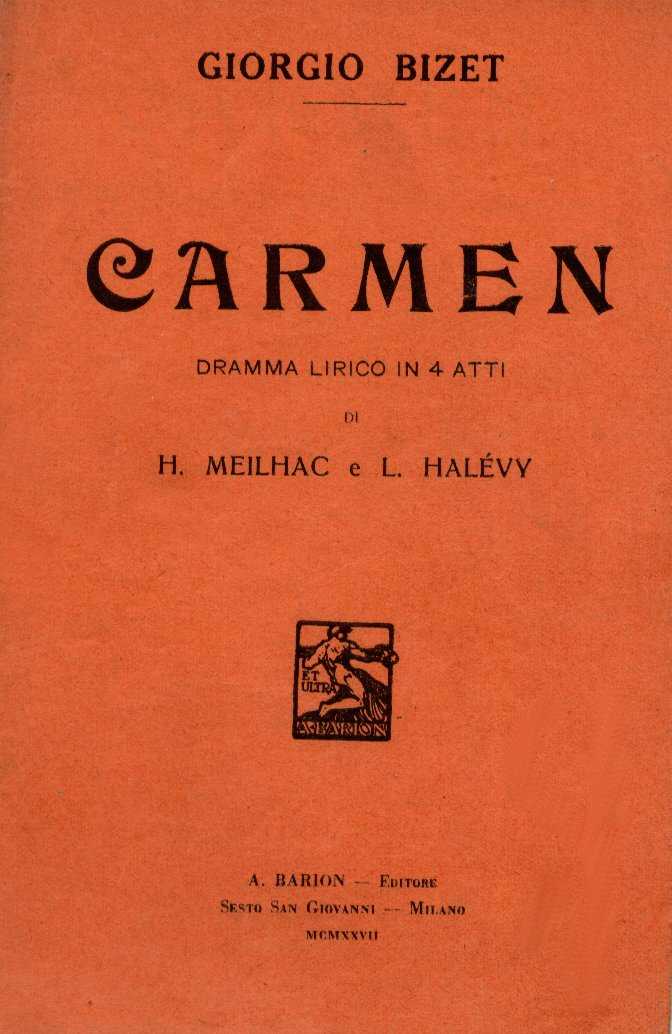
Georges Bizet: Carmen – best recordings
Carmen. Yes, it is undoubtedly one of the biggest hits in the operatic world. In my view, it’s a fascinating opera—a blend of passion, social commentary, and great music filled with memorable melodies. It feels very close to us: human beings driven by emotions and impulses, trying to navigate their principles. Ultimately, even though it is set in a romanticized vision of Spain, Carmen remains deeply relatable.
The characters are truly flesh and blood. Carmen, of course, is a fiercely independent woman who lives life on her own terms, seeking total freedom. Yet, she is realistic enough to accept her fate, knowing that Don José will ultimately kill her. Don José is a steady man—or at least strives to be—who allows his uncontrolled impulses to take over. Blurring the lines between love and obsessive desire, not being able to accept Carmen as she is, the only final possibility for him is to kill her. The supporting roles are also vividly depicted: Micaela as the traditional ideal of a perfect wife, Escamillo with his famous “Toreador” aria as a fearless, self-assured man, along with Zuniga, Frasquita, and Mercédès. Interestingly, there are strong parallels to Wagner’s Tannhäuser: Don José mirrors Tannhäuser, Carmen resembles Venus, and Micaela reflects Elisabeth. The ending, however, is quite different. While Tannhäuser chooses redemption, Don José surrenders to his darker urges, leading to his ultimate damnation.
Of course, it is hardly necessary to list the musical highlights, as almost everyone knows at least Carmen’s arias (the Habanera, ‘L’amour est un oiseau rebelle’, ‘Près des remparts de Séville’, ‘Près des remparts de Séville’), Don José’s aria (‘La fleur que tu m’avais jetée’), or Escamillo’s aria (‘Votre toast, je peux vous le rendre’). Ultimately, I personally find the Card Trio (‘Mêlons! – Coupons!’)—where the women read their fortunes and Carmen realizes she is going to die—much more interesting, as it really completes her character. For me, the final duet (‘C’est toi? – C’est moi’) is the quintessence of the opera. It perfectly synthesizes both personalities: Carmen demanding her freedom even if she has to die for it, and Don José desperately wanting to return to his old principles and trying to force Carmen to do the same. Which, of course, is impossible.
While countless recordings exist, my personal favorite is a classic historical one conducted by Cluytens (Erato/Warner, 1950). Recorded in France with a native cast, it perfectly captures that true French esprit. It’s direct, beautifully sung, and every singer is perfectly cast in their proper Fach. Cluytens conducts with real verve and careful attention to detail. Another great historical choice is Reiner’s recording from 1951. The cast is more international, but the sheer energy Reiner brings (just listen to ‘Les tringles des sistres tintaient’) is astonishing. I am less fond of Abbado’s version. Beecham’s is very well-balanced and is probably the best stereo recording available, even if Victoria de los Angeles as Carmen or Nicolai Gedda as Don José lack a little vocal heft—though this set does feature arguably the best Escamillo ever recorded in Ernest Blanc.
| Recording | Artists | What I like | What I don’t like | So/So | Quality |
|---|---|---|---|---|---|
| Fritz Reiner (1951) | Carmen: Rise Stevens Don José: Jan Peerce Micaela: Licia Albanese Escamillo: Robert Merrill | Reiner’s detailed and energic direction Stevens as Carmen | Albanese Peerce | **** (acceptable mono) | |
| Claudio Abbado (1978) | Carmen: Teresa Berganza Don José: Placido Domingo Micaela: Ileana Cotrubas Escamillo: Sherrill Milnes | Abbado is quite differentiate Cotrubas is a great Micaela The recording has no cuts | For me it is to intellectual, especially Berganza as Carmen Not ideal for a native french speaker | *** (modern analogical stereo) |