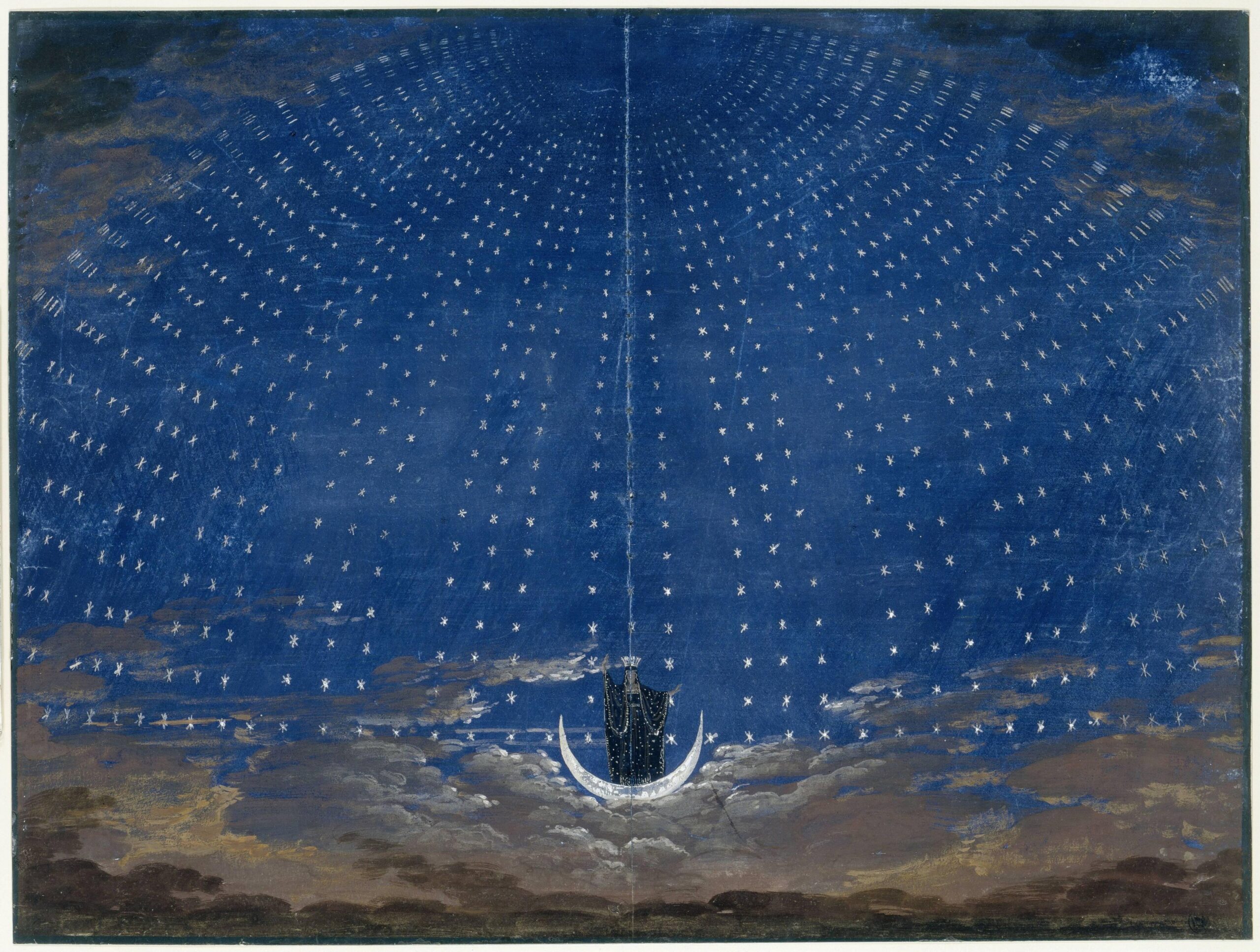
Wolfgang Amadeus Mozart: Die Zauberflöte – best recordings
This timeless classic is the perfect starting point for anyone new to opera. It’s packed with famous arias (just think of the Queen of the Night or Papageno), it’s fun, and it has a touch of seriousness—even if, in the end, the plot definitely isn’t on the same level as Le Nozze di Figaro or Don Giovanni. It’s too complicated, too incoherent… But who really cares? Just enjoy it as a charming fairy tale.
In my view, this is the best entry point. Really, just take it as a fairy tale. Of course, references to Freemasonry are more or less everywhere, but personally, I don’t read too much into them. For me, it’s simply a joy to listen to (and watch), packed with great lyrical arias (“Dies Bildnis ist bezaubernd schön” sung by Tamino, “Ach, ich fühl’s” by Pamina), comical numbers (just think of Papageno’s entire role), and musical pyrotechnics (“Der Hölle Rache” from the Queen of the Night). In this respect, it’s very different from what Mozart achieved with Don Giovanni or Le Nozze di Figaro, which are much more cohesive operas. But that probably wasn’t the intended goal—instead, it was likely meant more as entertainment for the broader public.
Nevertheless, Mozart strongly characterizes the roles musically here. Papageno’s part isn’t too demanding vocally, yet it has a direct expressiveness that fits a down-to-earth bird catcher. With their lyrical voices, Pamina and Tamino are well matched as a royal couple. Meanwhile, the hysterical coloratura soprano of the Queen of the Night contrasts sharply with the profound bass of Sarastro. A little stereotypical, perhaps, but I think that’s exactly what Mozart wanted for the audience it was intended for. And opera doesn’t always have to be intellectual…
As mentioned earlier, there are so many famous pieces here that it’s hard to single out just one. Take Papageno’s tragicomic aria in the second act, “Papagena! Papagena!”—for instance, it’s much more interesting than his better-known numbers, and I think it’s the best representation of his character. Moving on to other less mainstream moments, the ensemble “Wir wandelten durch Feuersgluten,” which accompanies the rite of passage to wisdom, is one of Mozart’s greatest achievements here—even if the music seems a bit disconnected from the action on stage (just close your eyes while listening and picture Tamino and Pamina walking through walls of fire and the like). Still, it’s a fairy tale in the end.
Which recording should you listen to? Nézet-Séguin’s is a very well-done modern option, though it’s not quite a reference recording. I personally like Furtwängler from 1949, but it feels quite historic, and nowadays more direct conducting is often preferred. As a safe bet, I would go for Böhm’s later recording from 1964—it features some of the best singing imaginable in several roles, paired with well-balanced conducting.
| Recording | Artists | What I like | What I don’t like | So/So | Quality |
|---|---|---|---|---|---|
| Wilhelm Furtwängler (1949) | Pamina: Irmgard Seefried Tamino: Walter Ludwig Königin der Nacht: Wilma Lipp Papageno: Karl Schmitt-Walter | Furtwängler conducting is exciting even if dated All singers are top class and in excellent mood | The sound is OK but lacks some details Schmitt-Walter is perhaps a little nasal Historical informed would be more energetic | **** (Live mono) | |
| Karl Böhm (1955) | Pamina: Hilde Güden Tamino: Léopold Simoneau Königin der Nacht: Wilma Lipp Papageno: Walter Berry Sarastro: Kurt Böhme | Böhm achieves an astonishing transparency Each singer is outstanding in his role | The spoken part is missing | Perhaps a little to slow thus becoming sometimes uninteresting | *** (Early stereo) |
| Otto Klemperer (1964) | Pamina: Gundula Janowitz Tamino: Nicolai Gedda Königin der Nacht: Lucia Popp Papageno: Walter Berry Sarastro: Gottlob Frick | Klemperer’s monolitical conducting Popp’s gorgeous and modern Königin der Nacht Berry is one of the best Papagenos Janowitz great as mostly everytime | The spoken part is missing A little more spontaneity would be welcome | Gedda is good, but I prefer a smoother Tamino Frick seems a little indisposed here | *** (Analogical stereo) |
| Karl Böhm (1964) | Pamina: Evelyn Lear Tamino: Fritz Wunderlich Königin der Nacht: Roberta Peters Papageno: Dietrich Fischer-Dieskau Sarastro: Franz Crass | Böhm, well served by the BPO, with an astonishing balance between transparency and drive Wunderlich’s signature role | Fischer-Dieskau does not work as Papageno | The women are certainly not the best possible for the roles, but they sing good at the end | **** (Analogical stereo) |
| René Jacobs (2009) | Pamina: Marlis Petersen Tamino: Daniel Behle Königin der Nacht: Anna-Kristiina Kaappola Papageno: Daniel Schmutzhard Sarastro: Marcos Fink | Some really great dynamic and rhythmic pinpointing. The singer ensemble is well chosen for the concept | Perhaps a little to much on the dynamic side, I miss the lyrical aspects | No singer really outstanding | *** (good modern digital) |
| Yannick Nézet-Seguin (2018) | Pamina: Christiane Karg Tamino: Klaus Florian Vogt Königin der Nacht: Albina Shagimuratova Papageno: Rolando Villazón Sarastro: Franz-Josef Selig | Nézet-Seguin has a very nice mixture of historical-informed and classical way to conduct. Karg is a very good Pamina as Selig is a good and interesting Sarastro | Villazón as Papageno does not work | Live recording with musical imperfections Vogt takes a little time to get into it Shagimuratova is good, but not on par with the historical bests | **** (modern live recording with some echo on the voices) |